Changzhou Treering Plastics Co., ltd
Quality is our Culture
Profession Manufacture of rotomoulding products and industrial plastic products ( Serena@cztreering.com )
Changzhou Treering Plastics Co., ltd
Quality is our Culture
Profession Manufacture of rotomoulding products and industrial plastic products ( Serena@cztreering.com )
 |
| Place of Origin: | Changzhou Jiangsu China |
| Brand Name: | Treering |
| Certification: | ISO 9001 |
| Model Number: | Nl-Customized vertival tank |
| Minimum Order Quantity: | Negotiation |
|---|---|
| Price: | Negotiation |
| Packaging Details: | Plastic warp / Carton /Pallet |
| Delivery Time: | 3-20 days |
| Payment Terms: | T/T, L/C, D/A, D/P, Western Union, |
| Supply Ability: | 50 pcs per weeks |
| Color: | Customizable | Impact Resistance: | High |
|---|---|---|---|
| Uv Stabilised: | Yes | Design Flexibility: | High |
| Feture: | Durable ,UV Stabilised | Drain Fitting Size: | 1/2 , 1" , 1.5" Or More |
| Eco-Friendly: | Yes | Manufacturing Material: | LLDPE |
| Highlight: | Rotomolded LLDPE Storage Tanks,Seamless Heavy-Duty Tank Design,UV-Resistant Custom Water Tanks |
||
OEM & ODM Polyethylene Tank Manufacturing | Custom Dimensions, Fittings & Support Structures
Not every industrial liquid storage application can be solved with an off-the-shelf plastic tank.
Some projects require a narrow tank to fit inside a machine enclosure. Others need a taller storage vessel to make better use of available
floor space. Certain applications require a precisely positioned outlet, a customized top opening or a support structure designed around the equipment.
At Changzhou Treering Plastics Co., Ltd., we manufacture custom rotationally molded polyethylene tanks for industrial equipment
manufacturers, system integrators and OEM product developers.
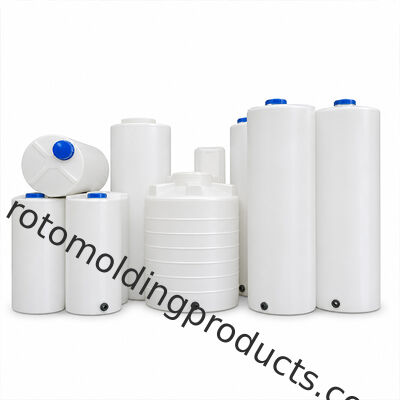
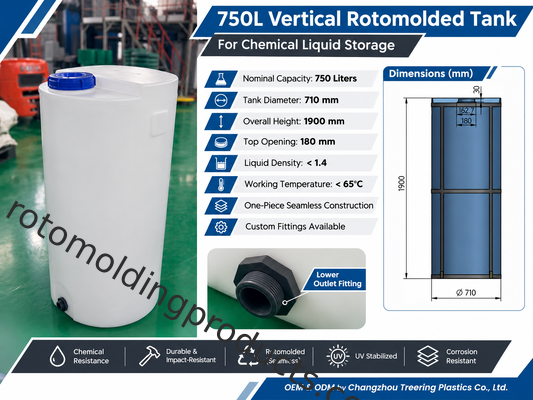
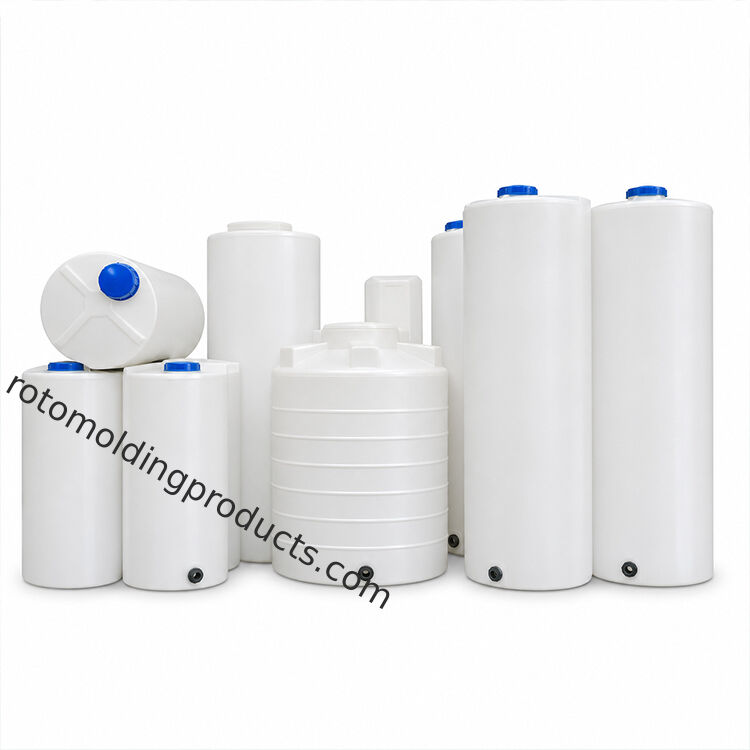
Our vertical tank range includes nominal capacities of 250L, 750L and 850L, with engineering options for alternative dimensions,
connection layouts, wall thicknesses and external support frames.
Whether you are sourcing an existing configuration or developing a new tank for your equipment, our team can support the manufacturing
process from drawing evaluation and mold development to production and inspection.
Three standard reference sizes. More possibilities through custom engineering.
Our vertical polyethylene tank designs offer different combinations of storage capacity, overall height and floor-space requirements.
Rather than selecting a tank based on capacity alone, OEM customers can consider the available installation space, liquid compatibility,
filling requirements, outlet position and supporting structure.
 |
|||
|---|---|---|---|
|
Specification |
850L |
750L |
250L |
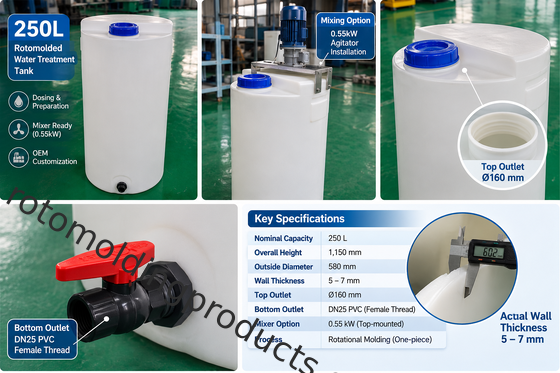
| Nominal capacity | 850 L | 750 L | 250 L |
| Overall height | 2023 mm | 1900 mm | 1150 mm |
| Outside diameter | 750 mm | 710 mm | 580 mm |
| Top opening (drawing) | Ø180 mm | Ø180 mm | Ø180 mm |
| Neck dimension (drawing) | Ø162.7 mm | 162.7 mm | Ø162.7 mm |
| Material | PE, grade to confirm | PE, grade to confirm | PE, grade to confirm |
| Manufacturing | Rotational molding | Rotational molding | Rotational molding |
| Support frame | Custom option | Custom option | Custom option |
| Wall thickness | 4-7 mm | 4-9mm | 4-9mm |
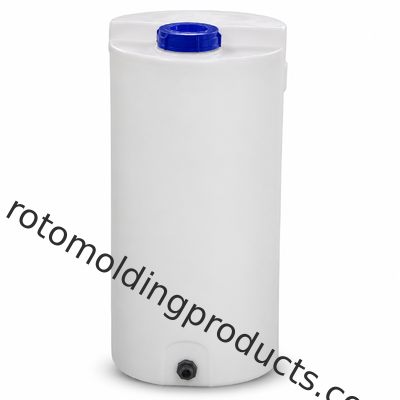
Designed as a compact reference configuration, the 250L tank is suitable for equipment layouts where installation space is limited.
Its relatively small footprint makes it worth considering for auxiliary liquid reservoirs, dosing-system integration, compact industrial process
equipment and other custom storage applications.
Typical customization enquiries include:
Alternative inlet and outlet locations
Custom top opening and lid arrangements
Project-specific wall thickness
Mounting and support configurations
Custom tank height or diameter
Best suited for: Compact equipment integration and smaller industrial liquid storage systems, subject to application review.
The 750L configuration combines a relatively narrow outside diameter with a tall cylindrical body.
For equipment manufacturers working within restricted floor-space envelopes, this configuration offers a useful starting point for integrating
higher liquid storage capacity.
Potential applications include industrial liquid handling, process equipment reservoirs, water-treatment system integration and customized
chemical storage assemblies.
Engineering options may include:
Custom connection sizes and positions
Alternative lid arrangements
Application-specific polyethylene grades
External ste
el support frames
Equipment-specific mounting provisions
Best suited for: Taller industrial equipment installations and applications requiring a relatively compact footprint.
The 850L model is the largest of the three reference configurations.
Its taller body and increased outside diameter provide a starting point for industrial liquid storage applications requiring greater nominal
capacity.
For OEM projects, the design can be reviewed alongside custom inlet and outlet arrangements, material selection, wall thickness
requirements and external structural support.
Potential project applications include liquid storage within water-treatment equipment, chemical processing systems and industrial
machinery.
Best suited for: Larger integrated equipment and customized industrial storage projects
.
A standard storage vessel may fit the required liquid volume but fail to meet the actual installation requirements.
A tank may be too wide for a machine enclosure, too tall for an installation area, or have an outlet positioned where maintenance access is
difficult.
This is where custom rotational molding becomes valuable.
Instead of asking customers to redesign their equipment around a stock tank, we can review the tank geometry and manufacturing
requirements around the intended installation.
Available installation space often determines the basic tank geometry.
We can evaluate requests for alternative tank diameters, overall heights, shoulder profiles and bottom configurations.
When the requested dimensions differ significantly from an existing mold, a new mold or tooling modification may be necessary.
Tank connections should be designed around the equipment's pipework, filling method and maintenance requirements.
We can review:
Top filling openings and threaded lids
Side or lower outlet positions
Alternative outlet diameters
Threaded connections and compatible fittings
Bosses and reinforced connection areas
Additional access or inspection openings
Connection designs are reviewed for manufacturability, sealing requirements and the intended operating conditions.
Wall thickness is not simply a number selected from a catalog.
It should reflect tank geometry, liquid density, operating temperature, installation method and expected service conditions.
Our manufacturing process allows wall thickness requirements to be considered during product development, with particular attention to
areas around corners, transitions, openings and other critical features.
Final wall thickness targets, tolerances and inspection methods should be agreed upon before production.
Polyethylene material selection can be adapted to the intended application.
Depending on compatibility and processing requirements, suitable rotational-molding-grade polyethylene materials may be evaluated,
including rotational-molding-grade LLDPE.
Natural translucent and custom-colored configurations can also be discussed.
Material compatibility, UV exposure, temperature conditions and regulatory requirements should be established before selecting the final
grade.
Certain industrial tank installations require a dedicated supporting structure.
We can review projects involving custom-designed metal frames, mounting arrangements and equipment-specific support configurations.
Frame design should consider the filled tank weight, load transfer, maintenance access and installation environment.
Any steel support structure requires separate engineering approval for the specified loading conditions.
Rotational molding is a manufacturing method used to form hollow plastic products within a heated rotating mold.
For suitable tank geometries, the process allows the main tank body to be manufactured as a single molded hollow component.
This can reduce the need for separately welded panels or multiple joined wall sections.
Unlike a simple cylindrical container made to a fixed stock specification, a custom rotomolded tank can be developed around equipment-
specific geometry.
Potential design features include shaped shoulders, recessed connection areas, molded bosses, mounting provisions and other functional
details.
Every feature must be assessed for tooling, demolding and consistent production.
Rotational molding is particularly relevant when an OEM manufacturer needs a hollow plastic component with customized geometry and
tooling dedicated to its product.
Once the design is finalized and the mold has been validated, the component can be manufactured according to the agreed production
specification.
Material performance depends on the selected polyethylene grade, processing conditions, final wall thickness and the application
environment.
We evaluate manufacturing feasibility alongside the product's intended functional requirements rather than treating every tank application
as identical.
Vertical tanks can be integrated into selected water-treatment systems for holding process liquids, subject to the required material,
connection and operating specifications.
OEM customization can help accommodate system layout, pipework routing and restricted installation space.
For compatible chemicals, vertical PE tanks may serve as storage vessels within chemical dosing equipment.
Connection positions, material compatibility, installation environment and secondary containment requirements should be evaluated during
design.
Suitability for a specific chemical must be verified rather than assumed from the tank material alone.
Equipment manufacturers often need reservoirs that are shaped around surrounding machinery.
Custom tank geometry can support compact machine layouts and equipment-specific connection requirements.
With appropriate chemical compatibility assessment, polyethylene reservoirs can be considered for agricultural liquid handling, fertilizer
preparation and auxiliary process equipment.
For equipment manufacturers developing a new product or updating an existing design, a custom tank can be engineered around revised
dimensional and connection requirements.
This may involve modifying existing tooling or manufacturing a new custom mold.
Send us your proposed tank dimensions, 2D drawings, 3D files, reference photographs or equipment installation requirements.
We review the general product geometry, connection positions, intended material, wall thickness requirements and manufacturing feasibility.
Before tooling, the design is reviewed for features relevant to rotational molding, including mold release, access openings, geometric
transitions and areas requiring careful wall thickness control.
Where necessary, we discuss practical adjustments with the customer.
Depending on the product geometry, size, tooling budget and production needs, we evaluate an appropriate mold construction approach.
Custom tooling is developed against the agreed drawings and production requirements.
Initial molded samples are evaluated against the agreed specification.
Dimensional measurements, functional fit and any necessary connection or leakage checks can be defined in the project inspection plan.
After sample approval, production is carried out using the approved material and process requirements.
Relevant inspection checkpoints can include visual condition, critical dimensions, connection areas and wall thickness measurements.
Finished products are packed according to the project requirements, taking into account their dimensions, fitted components and
transportation conditions.
We support international OEM orders and can discuss suitable export packaging and delivery terms.
We are a China-based plastic manufacturing company serving OEM and industrial customers.
Our manufacturing activities include rotational molding and the development of custom hollow plastic components.
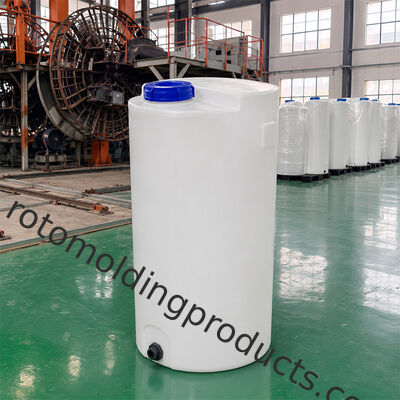
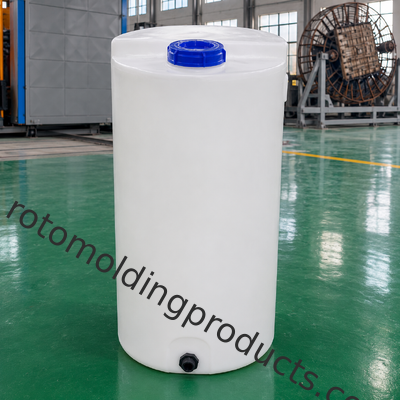
Our factory photographs show actual rotational molding equipment, molded industrial products and finished polyethylene tanks.
For customers sourcing industrial tanks overseas, direct communication with a manufacturing team can help simplify design evaluation,
tooling discussion and production coordination.
Rather than presenting only a catalog of available containers, we focus on understanding the product customers need to manufacture.
Our objective is to turn practical industrial requirements into manufacturable plastic components.
Industrial tanks should be evaluated according to their intended use.
Important quality considerations may include:
Dimensional Accuracy: Verifying critical dimensions required for equipment installation.
Wall Thickness: Checking specified locations and important transition areas according to the agreed inspection plan.
Connection Integrity: Evaluating outlet installation, fitting compatibility and sealing methods.
Material Identification: Confirming that the material used matches the approved project specification.
Leakage Inspection: Performing appropriate checks where required by the application and agreed acceptance criteria.
Visual Inspection: Identifying relevant molding defects or surface issues before shipment.
Test methods and acceptance limits should be specified for each project. A standard manufacturing inspection does not replace chemical
compatibility testing, structural validation or regulatory certification when those are necessary.
We welcome enquiries from businesses developing new equipment, modifying existing products or sourcing custom plastic components.
Our manufacturing discussions can cover:
Custom plastic tank design and dimensional changes
New rotational molding tooling
Custom polyethylene material selection
Molded connection features and fitting arrangements
Application-specific tank structures
Custom support frame coordination
Prototype and sample evaluation
Repeat production for approved OEM projects
Whether the starting point is an engineering drawing, an existing product or a concept for a new industrial application, we can review the
manufacturing requirements.
Yes. These three capacities are reference configurations. Other sizes can be evaluated according to the requested geometry, equipment
requirements and molding feasibility. New tooling may be required.
Yes. Tank diameter and height can be considered during custom design. The feasibility and tooling implications depend on the extent of the
changes.
Polyethylene is the proposed material family. The final rotational-molding grade, including whether an LLDPE formulation is appropriate,
must be selected according to the application and manufacturing specification.
We can evaluate industrial chemical storage tank projects. However, chemical compatibility must be verified against the exact substance,
concentration, temperature and service conditions. We do not assume that a polyethylene tank is suitable for every chemical.
Yes. Alternative connection locations can be reviewed during product development. Some modifications may require tooling changes,
molded bosses or additional fitting provisions.
Custom support frame configurations can be discussed. Material, fabrication, load rating and mounting details must be confirmed
separately for the project.
Yes. Wall thickness targets can be specified and evaluated during product development. Feasibility, tolerances and inspection requirements
depend on the geometry and operating conditions.
These reference configurations should not be assumed to be pressure-rated. Pressure or vacuum service would require separate
engineering design, validation and applicable compliance assessment.
Yes. You can submit 2D or 3D drawings for manufacturing review. The team can assess molding feasibility, required tooling and production
considerations.
Custom tooling and sample production can be discussed as part of an OEM development project. The sample approval process should be
agreed before commercial production.
We can evaluate replacement tank projects where sufficient dimensional information, reference samples or engineering drawings are
available. Fit and functional requirements must be checked against the existing equipment.
Yes. Changzhou Treering Plastics works with industrial customers on custom plastic manufacturing and export projects. Quotation and
delivery arrangements are discussed according to the specific requirements.
If your project requires a unique tank diameter, special connection positions, a tailored support structure or new rotational molding tooling,
our team can review your requirements.
Send us:
Required tank capacity and dimensions
Intended liquid and operating conditions
Preferred material and wall thickness, if specified
Inlet, outlet and fitting requirements
Drawings, photographs or reference samples
Estimated order quantity and delivery destination
Changzhou Treering Plastics Co., Ltd.
Custom Rotational Molding | OEM & ODM Plastic Manufacturing
Contact Person: Ms. Serena Tao
Tel: +8615051955023