Changzhou Treering Plastics Co., ltd
Quality is our Culture
Profession Manufacture of rotomoulding products and industrial plastic products ( Serena@cztreering.com )
Changzhou Treering Plastics Co., ltd
Quality is our Culture
Profession Manufacture of rotomoulding products and industrial plastic products ( Serena@cztreering.com )
 |
| Place of Origin: | Changzhou Jiangsu China |
| Brand Name: | Treering |
| Certification: | ISO 9001 |
| Model Number: | Nl-Custom rotomolded Products |
| Minimum Order Quantity: | Negotiation |
|---|---|
| Price: | Negotiation |
| Packaging Details: | Plastic warp / Carton /Pallet |
| Delivery Time: | 3-20 days |
| Payment Terms: | T/T, L/C, D/A, D/P, Western Union, |
| Supply Ability: | 50 pcs per weeks |
| Color: | Customizable | Impact Resistance: | High |
|---|---|---|---|
| Uv Stabilised: | Yes | Design Flexibility: | High |
| Feture: | Durable ,UV Stabilised | Drain Fitting Size: | 1/2 , 1" , 1.5" Or More |
| Eco-Friendly: | Yes | Manufacturing Material: | LLDPE |
OEM & ODM Rotational Molding | Custom Polyethylene Structures | Dedicated Tooling | Factory-Direct Manufacturing
At Changzhou Treering Plastics Co., Ltd., we believe that a molded plastic component should be developed around its intended function,
not simply copied from an existing product.
Our custom equestrian saddle tree manufacturing service focuses on converting customer-approved product concepts into precision-tooled
hollow plastic components.
From the geometry of a saddle support rail to the location of an attachment feature, each element can influence manufacturing feasibility,
assembly compatibility, and the mechanical behavior of the finished product.
We support equestrian equipment brands, saddle manufacturers, engineering teams, and international OEM buyers seeking tailored
rotational molding solutions.
One Manufacturing Process. Multiple Design Possibilities.
A saddle tree forms an important part of the internal structure of many traditional and modern horse-riding saddles.
Depending on the design, the tree may provide a framework for the seating area, support the attachment of additional components, and
help define the overall shape of the assembled saddle.
Our manufacturing focus is not limited to reproducing a standard saddle frame. We work with customers to evaluate custom hollow
components that incorporate tailored supporting geometries, mounting provisions, and carefully specified wall thicknesses.
| Feature | Product Description | OEM Customization |
|---|---|---|
| Manufacturing Process | Rotational molding for complex hollow plastic components | Custom tooling development |
| Material | PE-based rotational molding material | Material grade selection |
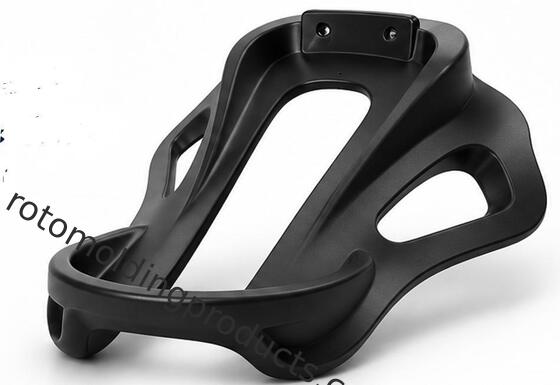
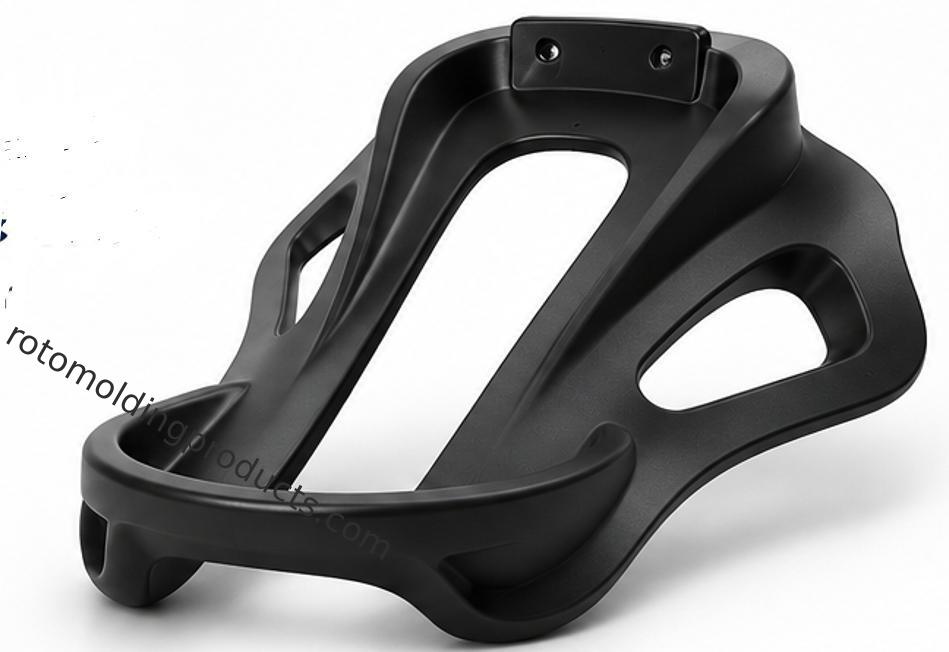
| Frame Structure | Hollow molded structural shell | Custom geometry and dimensions |
| Center Opening | Open-center frame configuration | Customer-specific opening profile |
| Molded Side Openings | Integrated functional openings | Opening shapes and locations |
| Attachment Areas | Recessed mounting provisions | Custom mounting layout |
| Surface Finish | Molded textured black surface | Custom texture and color |
| Wall Thickness | Determined by structural and processing requirements | Project-specific wall thickness targets |
| Production Service | Factory-direct OEM manufacturing | Prototyping and repeat production |
| Quality Control | Dimensional and visual inspection | Additional testing according to project requirements |
Custom Hollow Part Manufacturing: Rotational molding solutions for complex-shaped plastic structures.
OEM & ODM Development: Manufacturing based on approved drawings, samples and technical requirements.
Integrated Molded Features: Support for customer-designed openings, recessed areas and attachment provisions.
Custom Tooling: Dedicated mold development and sample evaluation.
Factory-Direct Supply: Manufacturing and export support from Changzhou, China.
Application-Specific Quality Control: Inspection and testing requirements agreed before production.
Have a custom equestrian plastic component project? Send us your drawings or 3D model for a manufacturing feasibility review and quotation.
|
Parameter
|
OEM Manufacturing Specification
|
|---|---|
| Product | Custom Rotomolded Horse Saddle Tree |
| Alternative Name | Molded Equestrian Saddle Support Frame |
| Manufacturing Method | Rotational Molding |
| Primary Material Option | Rotomolding-Grade Polyethylene |
| Material Grade | Selected According to Mechanical Requirements |
| Frame Configuration | Custom Hollow Structural Component |
| Surface Appearance | Smooth, Textured or Customer-Specified |
| Color Options | Black and Custom Colors Subject to Material Availability |
| Size | Based on Customer Drawings |
| Wall Thickness | Defined Through Design Review and Validation |
| Mounting Features | Customer-Specified Inserts, Recesses and Openings |
| Mold Development | Available |
| Prototype Sampling | Available |
| Dimensional Inspection | According to Approved Inspection Plan |
| Load and Fatigue Testing | According to Customer Requirements |
| Application | Equestrian Equipment Manufacturing |
| Supply Model | OEM / ODM / B2B |
| Manufacturer | Changzhou Treering Plastics Co., Ltd. |
| Country of Manufacture | China |
All specifications are project-dependent. Functional suitability must be established through appropriate engineering and product testing.

The design of a molded saddle tree should begin with understanding where the component will be supported, how it will be attached, and
what loads it may experience during use.
A well-planned rotationally molded structure can incorporate curved sections and hollow regions while maintaining a continuous molded
body.
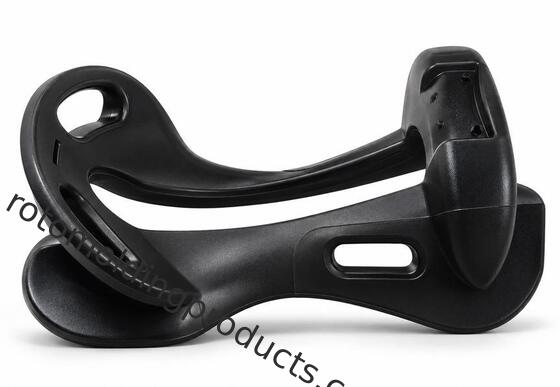
For example, the central channel, rail geometry, and connection areas may be developed as part of the same three-dimensional design.
|
Feature
|
Engineering Purpose
|
Customization Possibility
|
|---|---|---|
| Central Open Channel | Provides clearance within the saddle frame | Width and profile |
| Longitudinal Support Rails | Connects front and rear sections | Curvature and cross-section |
| Front Bridge | Creates a structural connection | Height, width and geometry |
| Rear Bridge | Connects the rear frame sections | Profile and connection geometry |
| Molded Recesses | Accommodates selected fittings | Depth and position |
| Side Openings | Provides specified attachment or clearance areas | Geometry and placement |
| Molded Surface Texture | Defines appearance and finish | Smooth or textured patterns |
| Edge Transitions | Connects adjacent molded surfaces | Radii and transition design |
| Mounting Locations | Supports assembly requirements | Location and configuration |
Design choices must be verified for strength, material distribution, assembly fit, and any applicable intellectual property restrictions.
Rotational molding can be particularly useful for components that require hollow geometry, substantial three-dimensional curvature, and
customized outer surfaces.
During production, polymer material is placed inside a mold. The mold is heated and rotated to distribute the material across its internal
surfaces.
Once the material has formed the component and the mold has cooled, the part is removed for finishing and inspection.
|
Design Requirement
|
How Rotational Molding May Help
|
|---|---|
| Hollow Components | Forms enclosed hollow geometries |
| Complex Curvatures | Accommodates contoured molded surfaces |
| Custom Geometry | Uses dedicated tooling developed around the design |
| Integrated Features | Allows selected bosses, recesses and surface details |
| Surface Texture | Transfers suitable finishes from the mold |
| Medium-Volume Production | Offers an alternative to certain high-pressure molding processes |
| Color Selection | Supports suitable compounded or pigmented materials |
| Design Changes | Tooling modifications may be possible depending on the mold |
The process also has limitations. Wall thickness control, dimensional tolerances, shrinkage, attachment design, and local mechanical performance must be considered during engineering.
Different plastic materials can provide substantially different mechanical performance.
For an equestrian support component, material selection must be based on the operating conditions of the complete product.
We can help customers compare suitable rotational molding materials and identify the data required for qualification.
| Material Consideration | Why It Matters | Suggested Evaluation |
|---|---|---|
| Tensile Properties | Relevant to material response under load | Tensile testing |
| Flexural Properties | Relevant to stiffness and bending | Flexural testing |
| Impact Resistance | Important where sudden loading may occur | Impact testing |
| Creep Behavior | Relevant to sustained loading | Long-term deformation assessment |
| Fatigue Resistance | Relevant to repeated loading | Cyclic load testing |
| Temperature Behavior | Can influence stiffness and dimensions | Operating-temperature evaluation |
| Environmental Resistance | Depends on storage and exposure conditions | Accelerated aging where required |
| Wall Thickness Consistency | Can influence local performance | Section measurements |
| Chemical Compatibility | Depends on cleaning and contact materials | Compatibility assessment |
Virgin LLDPE may be evaluated for suitable applications, but it should not automatically be presented as a certified structural saddle material.
The most appropriate material must be selected after the load case, design requirements, and acceptance criteria have been established.
Every equestrian product development project has its own combination of geometry, assembly requirements, and production targets.
We can evaluate customer-provided designs and propose manufacturing solutions based on their technical specifications.
| Customization Item | Available Service |
|---|---|
| Overall Dimensions | Custom development |
| Frame Geometry | Drawing-based development |
| Material Selection | Project-specific evaluation |
| Color | Custom options |
| Surface Texture | Tooling-dependent |
| Wall Thickness Targets | Engineering review required |
| Openings and Cutouts | Molded or secondary operations |
| Mounting Interfaces | Custom development |
| Tooling | Dedicated OEM molds |
| Prototype Samples | Available by agreement |
| Packaging | Customer-specific arrangements |
| Inspection Criteria | Defined according to customer specifications |
Early manufacturing review can reduce unnecessary tooling revisions and improve communication between the product developer and manufacturer.
| Stage | Our Activity | Customer Deliverable |
|---|---|---|
| 01 – Requirement Review | Review geometry and production requirements | Feasibility feedback |
| 02 – Material Discussion | Identify candidate materials | Material selection proposal |
| 03 – Tooling Evaluation | Review mold design and manufacturing constraints | Tooling quotation |
| 04 – Mold Development | Manufacture approved tooling | Production mold |
| 05 – Trial Molding | Establish initial production parameters | First samples |
| 06 – Sample Evaluation | Check agreed geometry and features | Inspection records |
| 07 – Design Approval | Incorporate agreed modifications | Approved sample |
| 08 – Production | Manufacture approved components | Production batches |
| 09 – Quality Inspection | Perform specified checks | QC documentation |
| 10 – Export Delivery | Package and ship products | Delivery documents |
A hollow molded component may appear satisfactory on the outside while still requiring further examination of its wall thickness, internal
consistency, or assembly performance.
We therefore encourage customers to define measurable acceptance criteria during product development.
| Inspection Item | Verification Method | Purpose |
|---|---|---|
| Visual Appearance | Visual inspection | Check visible molding defects |
| Overall Dimensions | Dimensional measurement | Confirm drawing requirements |
| Wall Thickness | Thickness measurement | Evaluate specified locations |
| Mounting Openings | Gauge or dimensional checks | Confirm assembly compatibility |
| Surface Condition | Visual and tactile examination | Identify unacceptable surface defects |
| Component Weight | Weighing | Monitor process consistency |
| Assembly Fit | Trial assembly | Verify mechanical interfaces |
| Static Loading | Agreed mechanical test | Assess structural behavior |
| Repeated Loading | Fatigue test | Assess cyclic performance |
| Environmental Aging | Agreed laboratory method | Assess specified exposure conditions |
The required test methods, loads, durations, and acceptance values should be approved before qualification.
Our custom rotational molding services can support several product development categories related to equestrian equipment.
| Application | Potential OEM Component |
|---|---|
| Riding Saddle Manufacturing | Custom saddle tree structures |
| Saddle Product Development | Prototype support shells |
| Equestrian Equipment Design | Specialty molded support components |
| Replacement Component Programs | Customer-owned replacement parts |
| Saddle Assembly Systems | Molded components with mounting provisions |
| Specialized Riding Equipment | Custom plastic structures developed from drawings |
These are potential manufacturing applications, not claims that one specific component has been approved for all the uses listed.
There is no single manufacturing method suitable for every saddle tree design.
The decision should depend on the required geometry, mechanical properties, production quantity, tooling budget, and acceptable
dimensional variation.
| Manufacturing Method | Typical Strength | Consideration |
|---|---|---|
| Rotational Molding | Large or complex hollow shapes | Wall thickness and tolerance control |
| Injection Molding | Detailed high-volume molded parts | Tooling investment and geometry constraints |
| Thermoforming | Open-shell configurations | Wall thinning and secondary assembly |
| Composite Manufacturing | Tailored reinforcement and stiffness | Material and processing complexity |
| CNC Machining | Prototype and precision material removal | Material waste and geometry restrictions |
For hollow PE parts, rotational molding may provide a practical option. For high-stiffness or highly loaded designs, other processes or materials may be more appropriate.
We are a China-based custom plastic manufacturing company serving international industrial and OEM customers.
Our focus is on developing and manufacturing non-standard molded products rather than relying exclusively on fixed catalog designs.
| Capability | Customer Benefit |
|---|---|
| Custom Rotomolding | Support for non-standard product geometry |
| OEM / ODM Development | Production based on approved designs |
| Mold Development | Dedicated tooling for customer projects |
| Material Discussion | Selection based on performance requirements |
| Sample Production | Product evaluation before series production |
| Finishing Operations | Application-specific post-molding processes |
| Quality Inspection | Agreed product verification procedures |
| Export Coordination | Factory-direct international supply |
Whether your company requires an equestrian plastic component or a completely different hollow industrial part, we welcome the
opportunity to evaluate your project.
A rotomolded horse saddle tree is a molded plastic structural component that may form part of a horse-riding saddle. Its suitability depends on the design, materials, and completed saddle system.
Certain geometries can be produced as one-piece hollow rotational moldings. The feasibility of a specific design depends on tooling, material processing, and engineering requirements.
No. Material suitability must be evaluated against structural, fatigue, environmental, and product safety requirements.
Yes. We welcome customer-owned designs and independently developed concepts. New geometries are reviewed for manufacturing feasibility and must be checked for relevant intellectual property rights.
Yes. Dimensions and geometry can be tailored through dedicated tooling, subject to technical review.
Potentially. Suitable attachment solutions depend on the material, local structure, installation method, and required load capacity.
We can discuss initial manufacturing feasibility, but the final wall thickness should be established using structural analysis, prototyping, and mechanical testing.
Testing can be arranged according to agreed requirements. Performance claims should be supported by actual test records.
The molded structural component must not be assumed to be a finished or approved horse-contact product. Final assembly, fitting,
padding, and validation are the responsibility of the complete product developer.
Tool ownership, confidentiality, and exclusive production arrangements can be addressed through agreed commercial terms.
We recommend providing drawings, 3D models, material requirements, anticipated order quantities, finish requirements, and any
mandatory testing specifications.
Yes. We specialize in custom rotationally molded products across multiple industrial applications.
Your Design. Our Rotational Molding Manufacturing Experience.
Developing a custom saddle tree, hollow plastic support, or specialized molded component?
Contact Changzhou Treering Plastics to discuss your next OEM manufacturing project.
Please provide your product drawings, required dimensions, intended application, estimated order quantity, and target material or
performance requirements.
Changzhou Treering Plastics Co., Ltd.
Custom Rotational Molding Manufacturer in China
Send Your Drawing | Request Tooling Evaluation | Get an OEM Quotation
Contact Person: Ms. Serena Tao
Tel: +8615051955023 (Wechat)